How to choose
Robot, cordless stick or corded: which vacuum suits your floors
Four measurements decide which vacuum type fits a home: dock clearance, carpet pile depth, stairs, and how much floor one battery charge has to cover.
The three vacuum types are not competing for the same job. A robot removes the daily layer without you being there. A cordless stick deals with the spill you can see. A corded machine with a driven brush roll is the one that pulls grit out of deep pile. Households that own one and resent it usually bought the type that does not match their floors.
This guide works through the four measurements that decide the answer: the clearance under your lowest furniture, the depth of your carpet, the number of stairs between floors, and the area one charge has to cover. Every price in it is an example used to show arithmetic, not a quote; prices move weekly and sales tax is set by state and locality rather than nationally.
Measure the clearance before you read a single spec sheet
A robot vacuum is a disc with a fixed height, and the height decides which parts of your floor it can reach. Take a tape measure to the underside of the sofa, the bed frame, the console table and the kitchen toe-kick, and write down the smallest number. That figure, not the suction rating, is the first filter on the shortlist, because a robot that cannot fit under the bed leaves a strip of floor you will still be doing by hand.
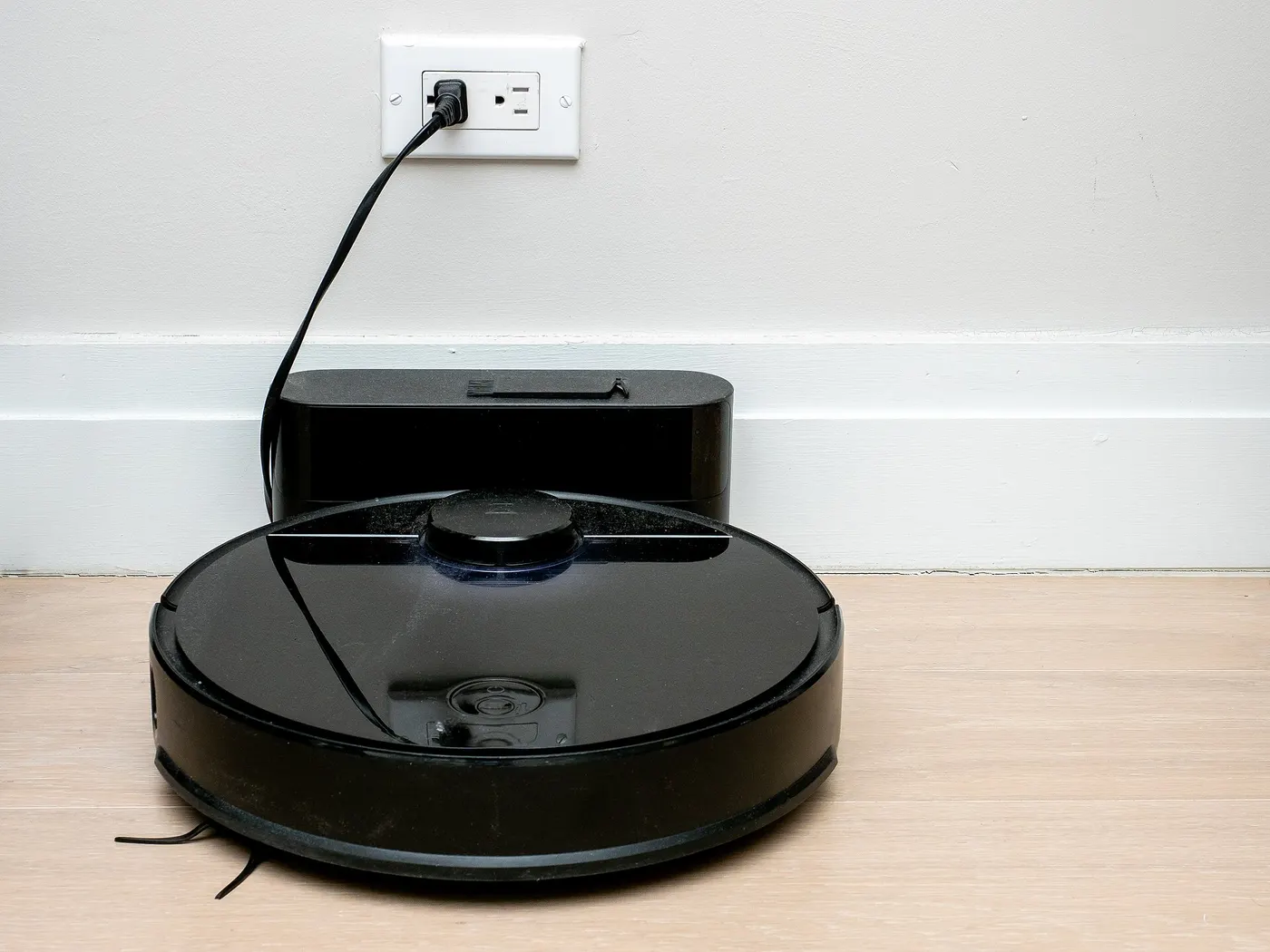
Do the same for the dock. A charging base needs a clear run in front of it so the robot can line up and reverse on; manufacturers publish the clearance they want on either side and in front, and a dock wedged into a corner is the most common reason a robot fails to redock and sits flat in the middle of the room.
Thresholds are the third measurement. A robot climbs a limited step height between rooms, and a 0.8 inch saddle between a hallway and a bathroom will stop a machine rated for 0.7 inch every single run. If the thresholds in your home are tall, a robot cleans one zone rather than the house, and that changes which type is worth buying.
- Lowest furniture clearance in the rooms you want cleaned, measured to the floor not the rug
- Clear space in front of and beside the intended dock position
- Tallest threshold the machine has to cross to reach the rooms you care about
- Depth of the deepest carpet pile in the house
- Number of steps between floors, and whether anything has to be carried up them
Carpet depth is what separates the three types
On hard floor, almost any machine with working seals picks up what is there, and the difference between types is convenience rather than result. On carpet the mechanism matters: dust sitting on top of the pile comes up with airflow alone, while grit worked down into the base of a deep pile only comes out when a driven brush roll agitates the fibres while the airflow is applied.
That is why the honest shortlist narrows by floor type. Low pile and flat weave rugs are inside a robot's working range. Plush and shag carpet is where a corded upright with a motor-driven brush still wins, and it is also where a robot loses the most battery, because the drive wheels and the brush both work harder on pile than on wood.
Pets change the ranking again, but less than people expect. The issue is not floor pickup, it is hair wrapping the brush roll and hair sitting on upholstery. A tangle-resistant roll and a mini motorised hand tool fix more of a pet household's problem than another 2,000 pascals of quoted suction.
| What you have | The measurement that decides it | Type that usually wins |
|---|---|---|
| Mostly hard floor on one level | Dock clearance and run time against floor area | Robot |
| Low-pile carpet and rugs, mixed with hard floor | Brush roll type and threshold height | Robot, with a stick for spills |
| Plush or shag carpet over most of the floor | Driven brush agitation | Corded upright |
| Two floors with stairs between them | Weight carried up the stairs | Cordless stick |
| Shedding pet on sofas and beds | Hand tool, not floor head | Any type with a mini motorised tool |
| Large single level cleaned daily | How often the bin has to be emptied | Robot with a self-emptying base |
No row here is a product recommendation. Each one names the measurement that settles the choice so you can take it yourself.
Run time has to be read against your floor area
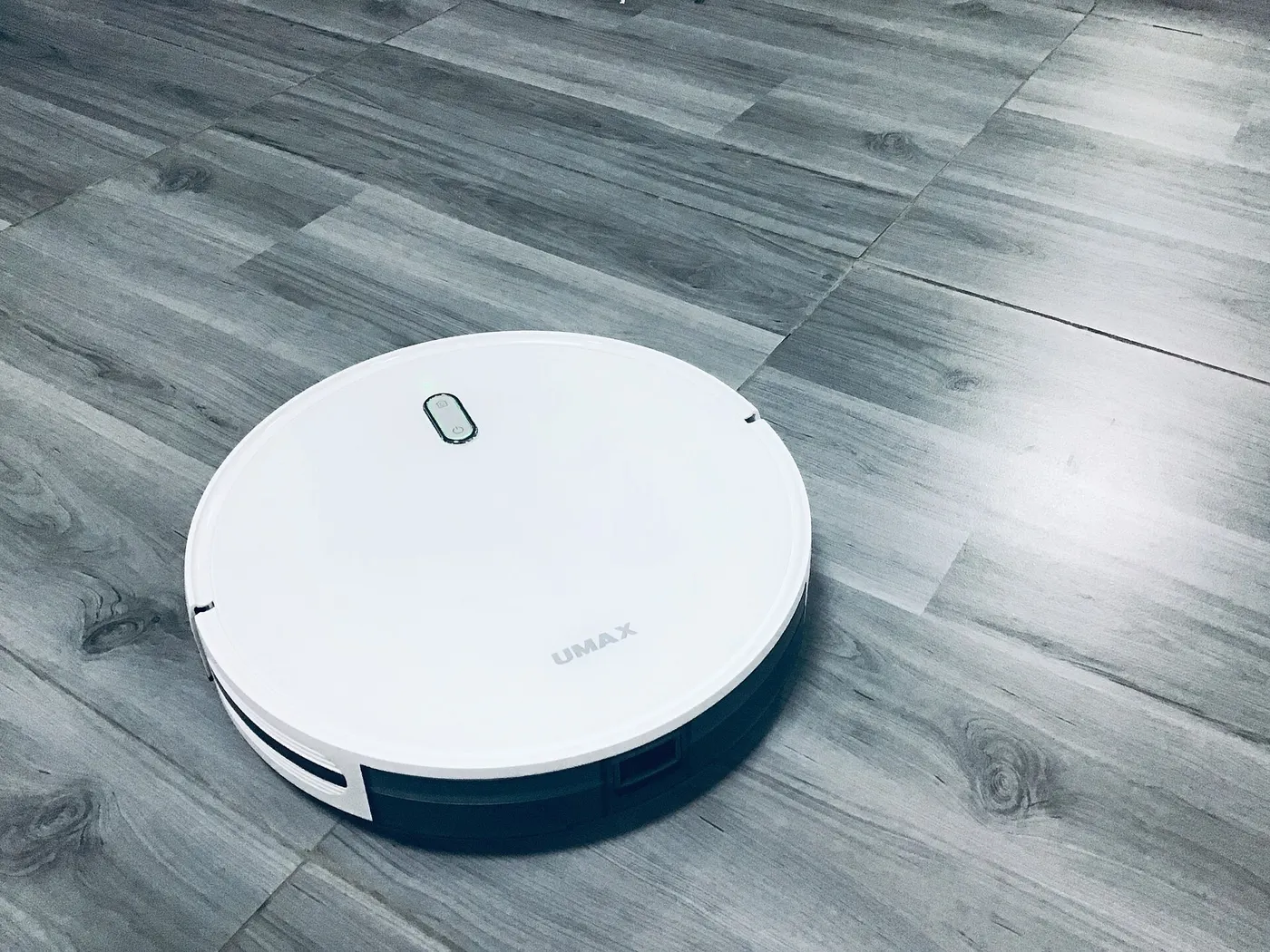
A stated run time is only meaningful next to the area it has to cover. The median single-family house completed in 2025 was 2,142 square feet according to the Census Bureau's Characteristics of New Housing, and a two-storey house of that size puts roughly half that area on each level. A robot cleaning one level is covering a much smaller number than the house figure, which is the comparison worth making.
Then add the recharge. If a robot's stated run time is 90 minutes, your level takes 150 minutes of machine time, and the base needs 3 hours to bring the battery back, the job finishes about 5.5 hours after it starts: 90 minutes out, 180 minutes charging, 60 minutes to finish. That is an excellent fit for a schedule that runs while the house is empty and a poor one if you want the floor done in the 20 minutes before someone arrives.
Cordless sticks are quoted the same way and should be read the same way. A 40 minute figure is almost always the lowest power setting with the plain floor head fitted; the motorised carpet head and the boost mode both draw more, and the time at the top setting is the number that matters if carpet is most of what you own.
| Step | Time | Running total |
|---|---|---|
| First pass until the battery is flat | 90 minutes | 90 minutes |
| Return to dock and recharge | 180 minutes | 270 minutes |
| Second pass to finish the level | 60 minutes | 330 minutes |
| Elapsed from start to finished floor | about 5.5 hours | — |
The 90 and 180 minute figures come from a manufacturer's own specification sheet in this example; the 150 minutes of machine time is what your floor plan demands. Put your own two numbers in and the arithmetic is the same.
Stairs, weight and the machine that gets used
A vacuum that lives in a cupboard on the wrong floor gets used less than one that hangs on a wall bracket where the mess is. On a two-storey house the practical question is what you are willing to carry up 14 steps, and the answer is usually a cordless stick at under 7 lb rather than a canister with a hose and a separate head.
Robots do not do stairs at all, which is worth stating plainly rather than designing around. A household with two floors and one robot has one floor on a schedule and one floor done by hand, and the second machine is not optional in that arrangement.
The last filter is storage and charging. A stick needs a wall point near where it hangs, a robot needs a dock against a wall with a socket, and a corded upright needs floor space in a cupboard. Decide where each one physically lives before you order, because the machines that end up on the landing get returned.
Before you buy
- Measure the lowest furniture clearance in every room you want a robot to enter
- Measure the tallest threshold between those rooms and compare it with the climb height on the spec sheet
- Write down the floor area of the single level the machine has to cover, not the whole house
- Check which power mode the stated run time belongs to before comparing two machines
- Decide where the dock, the wall bracket or the cupboard will be, and confirm there is a socket there
- If there are stairs, decide which machine lives on which floor before ordering
- Check that a tangle-resistant brush roll and a mini motorised tool are available if there is a shedding pet
Questions readers ask
- Do I need a robot and a stick, or will one do?
- One does, if your floors are uniform and on a single level. Two becomes the sensible answer when there are stairs, because the robot covers the level it lives on and the stick covers everything else. A household on one level with hard floor throughout rarely needs both, and the second machine then sits unused.
- Does a higher pascal figure mean better cleaning?
- Not on its own. Pascals describe sealed suction pressure, air watts describe airflow power, and the two are different quantities, so a bigger pascal number does not translate into a bigger air watt number. On carpet the driven brush roll contributes more to pickup than either figure, which is why a quiet corded upright can beat a robot quoting several thousand pascals.
- How do I know a robot will fit under my sofa?
- Measure from the floor to the lowest point of the frame, not to the fabric skirt, and compare it with the height on the manufacturer's specification sheet. Allow a quarter inch of margin, because carpet compresses under the wheels and the robot rides slightly higher on hard floor than the bare number suggests.
- Is a self-emptying base worth the extra money?
- It is worth it when the bin would otherwise need emptying more often than you would actually do it. A household running a robot daily over a large single level is emptying a small bin several times a week; a base holds several weeks of that. It adds a dust bag as a recurring cost, which the five-year budget guide on this site prices out.
- Can a robot replace deep cleaning the carpet?
- No. A robot keeps the surface layer down between deep cleans, and grit at the base of a plush pile needs the agitation a driven brush roll under load provides. The useful pattern is a robot on a daily schedule and a corded machine every week or two on the carpeted rooms.
Sources
- U.S. Census Bureau — Highlights of 2025 Characteristics of New Housing (median floor area of completed single-family houses) — checked 2026-11-03
- ENERGY STAR — certified product categories (confirms there is no vacuum or robot vacuum category) — checked 2026-11-03
- U.S. Consumer Product Safety Commission — voluntary standards for batteries, including UL 2595 for battery-powered appliances — checked 2026-11-03
Some links on this site can earn us a commission. That does not change which product a guide recommends, and it adds nothing to your price. Advertising is not enabled on this site yet. When it is, ads will be labelled and kept visually separate from the guides.